A notarized power of attorney (POA) is a crucial legal document that grants someone the authority to act on your behalf in specific matters. Notarization adds an extra layer of authenticity and legal recognition, ensuring the document's acceptance by institutions and courts.
Understanding the importance of notarizing a power of attorney can safeguard against potential disputes and provide peace of mind. By leveraging tools like the Notary Journal App, you can simplify the notarization process, ensuring your POA is handled efficiently and securely.

A Power of Attorney (POA) is a legal document that grants one person, known in the role of the agent, the authority to act on behalf of another person, referred to as the principal, in various matters. This document is pivotal for managing affairs when the principal is unable to do so themselves, either due to absence or incapacity.
There are several types of power of attorney, each serving different needs.
Understanding these types of power of attorney is essential because they define the scope of the agent's authority and responsibilities. When you grant someone the power of attorney, you provide them with the legal document necessary to manage your affairs, ensuring that your interests are protected and your wishes are carried out in your absence or incapacity.
Notarizing a Power of Attorney validates its authenticity and legal acceptance and notably reduces the risk of fraud. It confirms that the document is properly executed and recognized by law. This added layer of verification by a notary public confirms the identity of the principal and the agent, increasing the document's credibility.
One of the primary benefits of notarization is the prevention of fraud. By verifying the identities of all parties involved, a notarization makes it considerably harder for unauthorized individuals to forge signatures or alter the document. This enhanced security is critical in protecting both the principal and the agent from potential legal disputes or fraudulent activities.
Another key benefit is the document's legal acceptance. Many institutions, including banks and other financial entities, require a notarized power of attorney before they acknowledge its authority. This step ensures that the power of attorney meets state-specific legal requirements, making it a reliable instrument for managing affairs.
Similar Read: What Is Attorney in Fact?

To get a Power of Attorney notarized, you'll need to follow a few essential steps:
First, gather all necessary documents and information. This includes identification for both the principal and the agent, as well as any specific instructions or conditions you want the power of attorney document to include.
Next, choose a trustworthy agent. This person will act on your behalf, so selecting someone reliable and competent is vital.
Once you've selected your agent, draft the power of attorney document. You can either use a template or consult an attorney to make sure all legal requirements are met. The draft should clearly outline the powers granted to your agent, the duration of the authority, and any limitations or special instructions. After drafting, review all documents for accuracy and completeness.
Make sure the names, dates, and terms are correct to avoid any potential issues during the notarization process. Proper preparation will streamline the notarization, ensuring a smooth and efficient experience.
After confirming your power of attorney document is accurate and complete, the next step involves locating a notary public to notarize it. Start by searching for a local notary. You can find them at banks, law firms, or even shipping stores. Many states offer online directories to help you pinpoint nearby notaries.
Another convenient option is hiring a mobile notary. These professionals travel to your location, making the notarization process even more accessible. Mobile notaries are particularly useful if you have mobility issues or a busy schedule.
Online notarization is also gaining popularity. With the Notary Journal App, you can connect with a notary public virtually, saving time and enhancing convenience. Online notaries are authorized to notarize documents through video calls, promoting compliance with state laws.
| Register as a Notary in Notary Journal App and receive a complimentary listing on our partner site - www.notarypublicdirectory.com |
When selecting a notary, verify their credentials and make sure they're authorized to notarize your document type. The Notary Journal App simplifies this process by providing a secure platform for ID verification and record-keeping.
The notarization process ensures that your document is legally recognized and enforceable, safeguarding your interests and those of the involved parties. First, present all necessary identification and documentation. The notary will need to verify your identity to proceed.
Next, make sure you're fully aware of the document's contents and purpose. It's important to understand what you're signing. The notary will oversee the document's signing. The significance of signing in the presence of the notary can't be overstated; it confirms the authenticity of your signature.
The notary will then provide a notary acknowledgment, certifying that the signature is genuine and that you've signed voluntarily. Finally, the document is notarized, making it legally binding.
Understanding the nuances of state-specific requirements for notarizing a power of attorney is crucial to guaranteeing its legality and effectiveness. State laws vary by region, meaning what's applicable in one area mightn't be acceptable in another.
If you need to notarize a power of attorney for property in Illinois, be mindful that Illinois has specific criteria, like the necessity for two witnesses and a notary. California mandates that a notary public use a designated acknowledgment form, while Texas necessitates that the notary confirms the signer's identity with government-issued identification. Florida has its own distinct provisions, including a mandate for the notary to complete a specific certificate for the notarization to be considered valid.
Verifying the validity of a notarized power of attorney requires careful attention to common mistakes that can easily be avoided. Avoiding these errors can save you time, and money, and guarantee that your document holds up under legal scrutiny.

Avoiding these common mistakes is essential, but utilizing modern tools like the Notary Journal App can make the notarization process for a power of attorney even more seamless and efficient. This app offers a complete solution for managing POA documents, effortlessly ensuring you meet all necessary compliance checks.
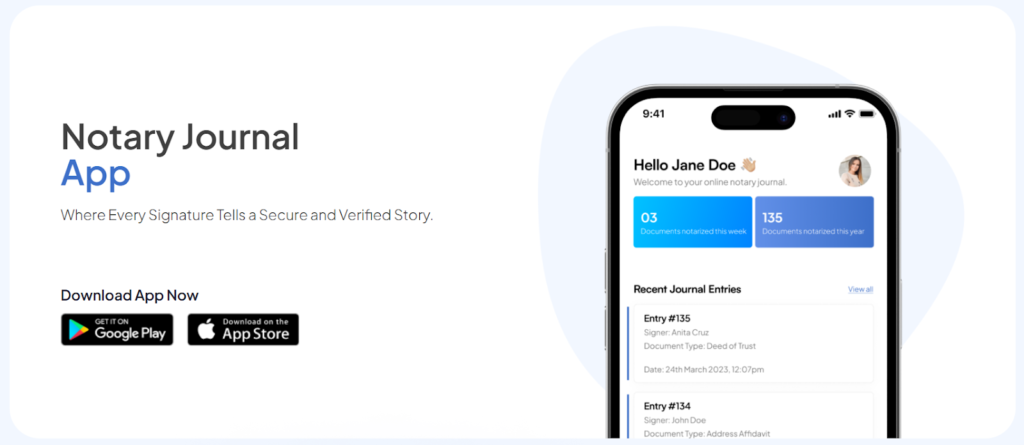
The Notary Journal App streamlines the notarization process by verifying IDs and auto-populating journal entries, reducing the chances of error. Its user-friendly interface allows you to save signatures and securely store all required information, making it simpler to retrieve documents when needed.
The days of shuffling through piles of paperwork are past; everything is digitally organized and accessible right from your mobile device.
Furthermore, the app includes built-in compliance checks to guarantee that all legal requirements are met, safeguarding the validity of your notarized documents. This feature is particularly vital for managing POA documents, where strict adherence to state-specific laws is non-negotiable.
With secure digital storage, your notarized documents are protected and easily accessible for future reference. By integrating the Notary Journal App into your workflow, you can greatly enhance the efficiency and security of your notarization process.
Yes, a power of attorney can be notarized online, like traveling a digital highway. This method is efficient, secure, and legally recognized in many states. Use the Notary Journal App to streamline the process seamlessly.
Notarizing a power of attorney typically takes 15-30 minutes. With the Notary Journal App, you can expedite the process. Its advanced features guarantee swift, secure, and compliant notarizations, saving you valuable time.
Just like Odysseus journeyed through many lands, a notarized power of attorney can be valid across multiple states if it complies with each state's laws. Verify specific state requirements to guarantee seamless legal recognition.
You'll typically pay between $10 and $50 to notarize a power of attorney. Costs vary by state and notary. Using the Notary Journal App can streamline the process and provide transparent pricing.
Over 90% of states mandate the principal's presence for notarizing a power of attorney. You can't notarize without the principal. Guarantee all parties are present to avoid invalidating the document and assure legal compliance.
If a power of attorney is not notarized, it may not be accepted by financial institutions, medical facilities, or courts, leading to potential disputes and delays in executing the principal's wishes.
You can find a notary through local banks, notary public offices, or online notary services. The Notary Journal App simplifies this process by connecting you with verified notaries and offering digital notarization options.
Most types of power of attorney, including general, durable, special, and healthcare POAs, require notarization to be legally effective. Always check state-specific requirements to ensure compliance.
This depends on state laws and the notary's professional guidelines. Some states prohibit notaries from notarizing documents for immediate family members to avoid conflicts of interest. Always verify local regulations.
The validity of a notarized power of attorney depends on the terms specified within the document. It remains in effect until the expiration date, revocation by the principal, or the principal's death.
Yes, but changes must be notarized as well. To amend a notarized POA, draft a new document outlining the modifications and have it notarized to ensure legal validity.
Understanding the importance of a notarized power of attorney is crucial for ensuring the correct handling of your legal and financial matters. Notarization adds a layer of security, authenticity, and legal recognition, preventing potential disputes and ensuring the document is widely accepted.
Utilizing the Notary Journal App can streamline this process, offering convenience and peace of mind. The app provides tools for secure digital notarization, compliance checks, and efficient document management. Download the Notary Journal App today to simplify your notarization needs and safeguard your important legal documents.